Musk v. Altman Trial: xAI Trains on OpenAI Models in Court
Musk v. Altman trial week one: xAI copies OpenAI models, secret Zuckerberg texts surface, and AI is already reshaping how democracy works.
In the Musk v. Altman OpenAI lawsuit — already the most consequential AI legal battle in history — week one ended with a self-undermining admission: xAI, Musk's own AI company, trains its models by distilling OpenAI's own outputs. Elon Musk walked into an Oakland federal courthouse on May 4, 2026 — crisp black suit, calm demeanor, occasionally cracking jokes with lawyers — and within hours of cross-examination, made an admission that cut straight through his own lawsuit. xAI, the AI company Musk built after leaving OpenAI, trains its models by distilling (copying learned behaviors from another AI's outputs) OpenAI's own systems. "Standard practice among all labs," Musk told the court. The same OpenAI models he claims were built on mission betrayal are the ones his company is learning from.
That single admission may define the first week of Musk v. Altman — a 3-week civil trial before 9 jurors in Oakland where journalists waited 2+ hours starting at 6 a.m. to claim one of only 30 unreserved courtroom seats. It is already the most consequential AI legal battle in history, and the most explosive testimony is still ahead.
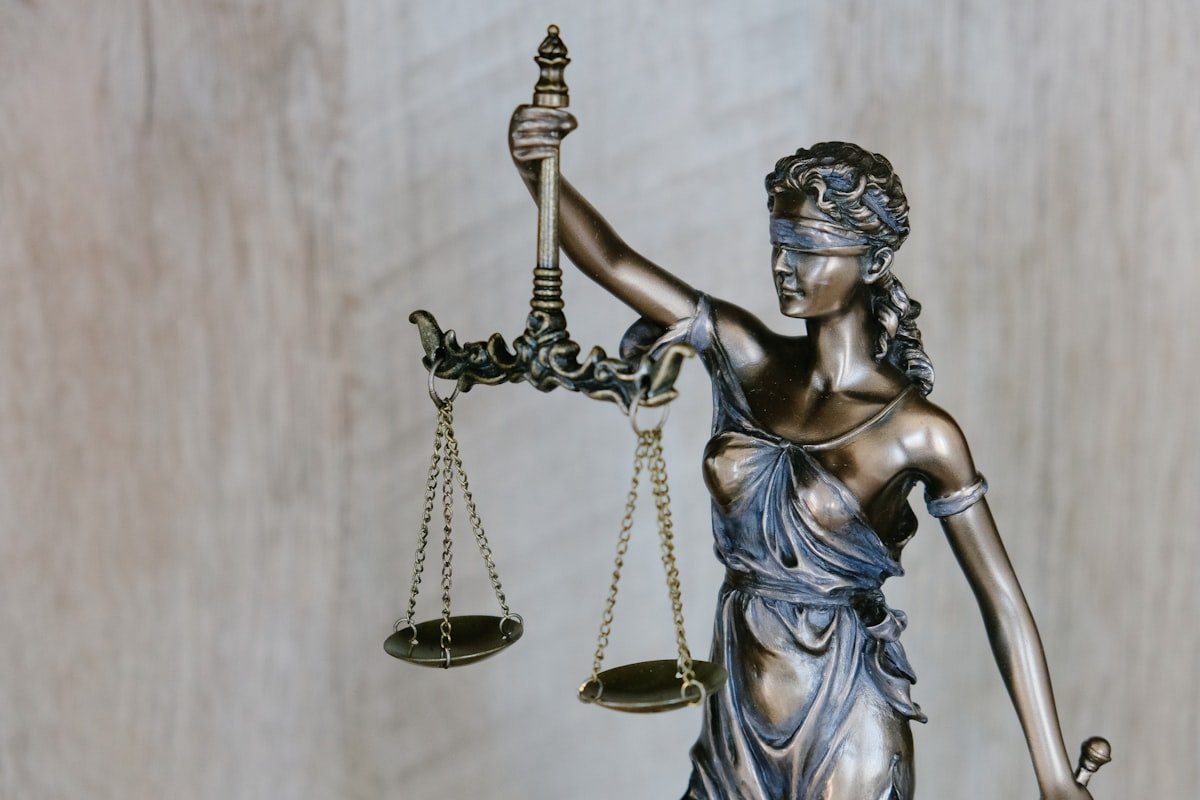
A Decade-Old OpenAI Founding Mission Becomes a Federal Lawsuit
Musk co-founded OpenAI around 2015–2016, funding it with tens of millions of dollars under the belief it would remain a nonprofit (a tax-exempt organization legally bound to a public mission rather than shareholder returns) focused on AI safety. His lawsuit, filed in 2024, claims OpenAI deceived him about that core mission when it accepted billions from Microsoft and began preparing a for-profit conversion.
The central legal hurdle is statute of limitations (the rule requiring lawsuits to be filed within 3–4 years of discovering the alleged misconduct). Musk argues he only realized the deception in 2022 — making his 2024 filing potentially timely. Opposing counsel argues he should have known earlier, which would make his claim time-barred before it even reaches the substance of his allegations.
- 2015–2016 — Musk co-founds and funds OpenAI as a nonprofit safety lab
- 2022 — Musk claims he first discovered alleged deception
- 2024 — Lawsuit filed in federal court
- October 2025 — OpenAI reaches deals with California and Delaware attorneys general, granting the nonprofit less day-to-day operational control
- May 2026 — Trial begins in Oakland; 3-week schedule with 9 jurors
The 9 jurors will deliver advisory verdicts (formal recommendations that guide the judge but do not bind the final ruling) — meaning a single judge ultimately decides whether Musk's claims succeed.
The xAI Distillation Admission That Defined Musk v. Altman Week One
Under cross-examination, Musk acknowledged that xAI uses model distillation (a technique where a newer or smaller AI learns by studying the outputs of a larger, existing model — essentially letting one AI teach another). The model being studied? OpenAI's. He framed it as industry-standard practice.
This created an instant contradiction at the heart of his lawsuit. Musk is suing OpenAI partly on the grounds that its AI poses catastrophic risks to humanity. The federal judge — having heard arguments escalate toward existential territory — intervened firmly: "This trial was not about whether or not artificial intelligence has damaged humanity." When Musk's lawyer had declared "we could all die as a result of AI," the judge redirected proceedings to the narrower legal questions at hand.
The judge also noted, with apparent dry precision, that plenty of people also wouldn't want to put humanity's future in Elon Musk's hands — given that xAI operates in the same high-stakes AI space. Musk, who holds no law degree, attempted to correct an attorney on courtroom terminology. The judge cut in: "You're not a lawyer, Elon." Musk's reply was immediate: "Well, I did take Law 101." The courtroom laughed. The jurors took notes.
Musk, Zuckerberg, and the Texts Nobody Expected
Perhaps the most surprising revelation of week one came not from testimony but from evidence: text messages admitted to the court showed that Musk and Mark Zuckerberg — fierce rivals in both social media and AI — secretly coordinated to stop OpenAI's for-profit restructuring and attempted to jointly bid for the nonprofit's assets.
That the two most prominent AI competitors to OpenAI worked together in private — despite their very public feud — tells a story no press release or earnings call ever revealed. MIT Technology Review's Michelle Kim, who attended the trial in person, noted that "cringey texts, raw diary entries, and endless scheming behind the founding and growth of OpenAI are expected to come to light" throughout the remaining weeks of testimony.
Witnesses expected to take the stand in the next two weeks include figures central to AI's formative period:
- Greg Brockman — OpenAI president and co-founder
- Ilya Sutskever — Former OpenAI chief scientist; departed in 2024 to found his own AI safety lab, Safe Superintelligence
- Mira Murati — Former OpenAI CTO, left the company in late 2024
- Satya Nadella — Microsoft CEO, whose company provided OpenAI's largest external funding
- Stuart Russell — Pioneer AI safety researcher and UC Berkeley professor
Each witness carries the potential for revelations that reshape public understanding of how OpenAI actually operated — and what Musk actually knew, and when.
While the Courtroom Argued, AI Governance and Democracy Were Already Changing
The Musk trial dominates AI news cycles, but a quieter transformation is advancing in parallel: AI is becoming the primary interface through which millions of people form political beliefs, consume information, and interact with government. Researchers affiliated with the Office of Eric Schmidt published a policy blueprint in MIT Technology Review this same week warning that this is not a coming scenario — it is current reality.
Search is now substantially AI-mediated (filtered, ranked, and summarized by AI systems before the results ever reach you). Next-generation AI assistants will synthesize political information and present conclusions with an authority that traditional search never projected. Personal AI agents will conduct research, draft letters to elected representatives, lobby agencies, and inform ballot decisions — automatically, at scale, and in your name. Before those agents are acting for you, our AI automation setup guide explains how these systems are built and deployed.
When AI Outperformed Human Fact-Checkers
A field evaluation on X (formerly Twitter) found AI-generated community notes (crowd-sourced, annotation-style fact-checks attached to posts) were rated more helpful than human-written ones by participants across diverse political viewpoints. This directly challenges the assumption that human moderation is inherently more credible or less susceptible to bias. The finding is not yet peer-reviewed, but its implications for how platforms govern misinformation — and who voters trust — are significant.
Collective Bias at 300 Million Interactions a Day
The deeper concern researchers flag is collective bias (the phenomenon where millions of AI agents each make small, individually neutral choices that aggregate into a systematic tilt in public opinion — without any single agent acting with intent). You don't need a malicious algorithm to produce a distorted society; a consistent nudge, multiplied across hundreds of millions of interactions, is sufficient.
Andrew Sorota and Josh Hendler, writing for MIT Technology Review, stated the stakes plainly: "Failing to design for democratic outcomes, in a domain this consequential, means designing for something else. And the history of unaccountable power does not leave much room for optimism about what that something else tends to be."
- Multiple U.S. states are already using AI-mediated platforms to conduct civic deliberation at scale
- Personal AI agents may reinforce existing beliefs rather than surface information that challenges them
- Automated bots are already distorting public comment processes — before full-scale AI agent deployment even begins
- Identity verification standards for AI agents acting as proxies for human citizens do not yet exist
- Democracy risks fracturing into personalized private worlds — each internally coherent but collectively incompatible with shared deliberation
Historians note this pattern repeats: the printing press triggered the Reformation; the telegraph enabled the bureaucratic state; broadcast media created mass democracy. AI is the next compression in information history — but it arrives faster and with fewer institutional guardrails than any of its predecessors.
OpenAI Trial Week 2: Nadella, Sutskever, Murati — and Everything That Hangs on the Verdict
At least two more weeks of trial remain. The stakes extend well beyond two tech founders disputing a decade-old agreement:
- If Musk wins (even partially): OpenAI's planned IPO could be blocked or delayed; corporate governance norms for all AI companies get reset; the Musk–Zuckerberg coordination becomes permanent public court record
- If OpenAI wins: Courts signal that for-profit conversion is legally permissible even when the founding mission was explicitly nonprofit — a precedent every AI lab considering a similar transition will cite
- Either way: Internal communications from the highest levels of Big Tech enter the permanent historical record
The witnesses arriving in the next two weeks — Nadella, Sutskever, Murati — were present for OpenAI's most consequential decisions. Their testimony will almost certainly produce more admissions than week one. Watch it closely. And as AI agents begin to mediate your own access to news, political information, and government services, understanding how these systems work is no longer optional. Start with our guide to AI automation before the agents are working for someone else's interests — not yours.
Related Content — Get Started | Guides | More News
Sources
Stay updated on AI news
Simple explanations of the latest AI developments