DeepSeek-TUI: Free AI Coding Agent Hits GitHub Trending
DeepSeek-TUI hit GitHub Trending as a free terminal AI coding agent — rivaling $200/month ChatGPT Pro with zero subscription cost.
A free terminal AI coding agent just cracked GitHub's daily trending list — and developers paying $200 a month for ChatGPT Pro are taking notice. DeepSeek-TUI is a command-line AI coding agent built specifically for DeepSeek models, and its appearance on GitHub Trending on May 6, 2026, signals something bigger than one open-source project going viral: the $200/month AI automation subscription era may be hitting its ceiling.
The $200-a-Month Problem Nobody Wants to Say Out Loud
ChatGPT Pro costs $200/month. GitHub Copilot runs $10–$19/month. Claude's Max plan is $100/month. For individual developers or small teams, that stack alone hits $1,200 to $2,400 per year — just for AI assistance on top of the code they already write. The tools trending alongside DeepSeek-TUI on GitHub this week tell a clear story: developers are quietly building their own replacements.
- DeepSeek-TUI — A terminal-native coding agent (runs inside your command line, no browser required) for DeepSeek models. Free, open-source, zero subscription.
- Plandex v2 — An open-source autonomous coding agent (AI that writes and edits code without step-by-step instructions) with a 2,000,000-token context window. CLI-first, no GUI needed.
- Ruflo — A multi-platform agent orchestration tool (software that coordinates multiple AI agents working in parallel) targeting Claude users specifically.
- TabPFN — A foundation model (a large AI pre-trained on broad data) built exclusively for tabular data like spreadsheets and structured databases.
What unites them: zero recurring subscription cost. What separates them from commercial tools: they run where developers already live — the terminal.
DeepSeek-TUI: The Coding Agent Built for the Terminal
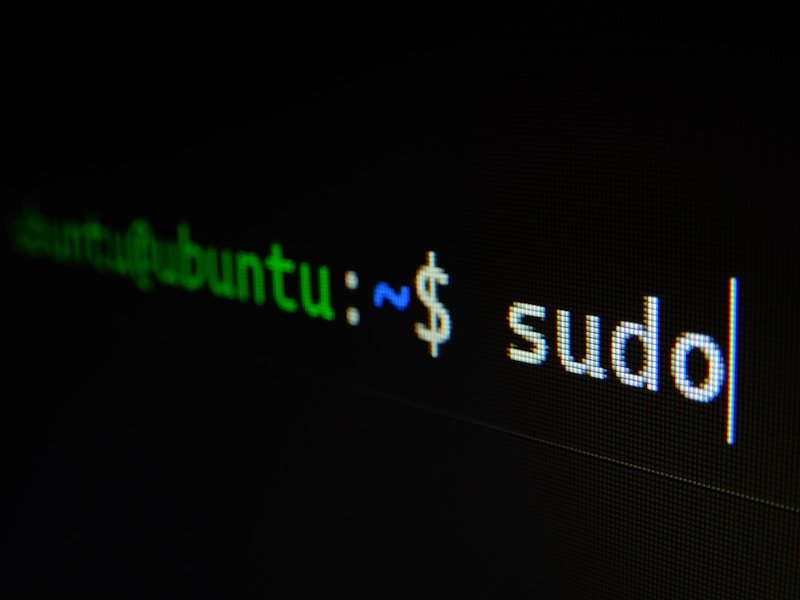
DeepSeek-TUI is a CLI (Command-Line Interface — a text-based program you control by typing commands, not clicking buttons) coding agent. Unlike browser-based tools that require a separate window, constant internet calls, and persistent login sessions, it lives entirely inside your terminal — the same environment where you write, commit, and deploy code every day.
The agent is built specifically around the DeepSeek model family — a series of high-performance, lower-cost AI models that have gained significant traction as a credible alternative to OpenAI's GPT-4o and Anthropic's Claude. DeepSeek's inference cost (the price to run the AI per query) runs substantially cheaper than comparable OpenAI models, making it a natural fit for open-source agent tooling where compute budgets matter.
Key traits of terminal-native agents like DeepSeek-TUI:
- No GUI overhead — runs directly on the machine where your code lives, no browser tab or Electron app consuming RAM
- Scriptable — chains cleanly with standard terminal tools like
grep,git, andmakewithout custom integrations - Model-specific — tuned for DeepSeek's architecture, not a generic wrapper that performs equally poorly across every model
- Inspect and modify — open-source means you can read the code, remove features you don't want, and self-host entirely on your own infrastructure

The Context Window Arms Race — and Why 2 Million Tokens Changes Everything
One of the most striking numbers in this week's trending data: Plandex v2 ships with a 2,000,000-token context window. To understand the scale: the original GPT-4 launched with an 8,192-token limit. A 2M-token window can hold roughly 1,500 pages of dense code — enough to load an entire medium-sized software project into the AI's working memory at once, with room to spare for conversation history.
98% Less Noise, 100% More Signal
One trending project demonstrated a 98% reduction in what engineers call "sandboxed tool output" (the text an AI generates when running commands inside an isolated testing environment — debug logs, system messages, and intermediate outputs that do nothing to improve the final code). Compressing that noise by 98% means the AI can spend nearly its entire memory budget on the actual task, not on logging scaffolding.
This same optimization supports deployment across 14 different platforms — from local developer laptops to cloud CI/CD pipelines (automated systems that test and deploy code whenever changes are committed to a repository). One agent configuration, fourteen environments, zero reconfiguration overhead.
# Plandex v2 — load an entire project into a 2M context window
plandex load ./src/**/*.ts --context 2000000
plandex tell "Refactor the authentication module to use JWT refresh tokens with 30-day expiry"

# DeepSeek-TUI — standard terminal agent setup pattern
git clone https://github.com/username/deepseek-tui
cd deepseek-tui
pip install -r requirements.txt
./agent --model deepseek-coder "Review this PR for security vulnerabilities"
Real Cost Math: $3/Year vs. $200/Month
One workflow tool trending alongside DeepSeek-TUI this week costs $3/year. ChatGPT Pro costs $200/month — $2,400 annually. The cost gap: 800x. For a team of 3–5 developers, that translates to $7,200 to $12,000 per year in AI subscriptions versus $9 to $15 in open-source tooling that covers much of the same ground.
The economics extend to what developers are building with these agents. A Quant Agent (an AI agent purpose-built to develop and backtest quantitative trading strategies automatically) was deployed and tested with only $1,000 in starting capital — demonstrating that specialized agents don't require enterprise infrastructure or enterprise budgets to deliver real-world results.
What the broader open-source AI automation ecosystem is delivering right now:
- SimpleQA implementations (accuracy-testing frameworks that measure whether AI gives correct factual answers consistently) hitting approximately 95% accuracy on standard benchmarks
- Purpose-built sub-agents for frontend UI generation, Reddit community management, and automated fact-checking — specialists, not generalists
- Claude Agent SDK integration (Anthropic's toolkit for building multi-step AI workflows) now ships with native web browsing, reducing dependency on expensive third-party scraping services
- CLAUDE.md methodology (a structured plain-text configuration approach that improves Claude Code behavior based on documented LLM coding best practices) being shared and iterated across the open-source community
What Developers Should Do This Week
GitHub Trending is a leading indicator of where developer attention — and soon, developer infrastructure budgets — is flowing. When multiple terminal-native, model-specific, zero-subscription AI coding agents land on the same trending page in the same week, that is a structural pattern, not a coincidence. The 2024 narrative was "can open-source match commercial?" The 2026 narrative is "where did my $200/month subscription go?"
If you're currently paying $200/month for ChatGPT Pro and doing most of your AI work inside a terminal or code editor — whether through vibe coding sessions or production-grade AI automation workflows — this week's GitHub Trending page is worth a direct evaluation. Search "DeepSeek-TUI" on GitHub and run it alongside your current tool for one session. Test Plandex v2's 2M context window on a codebase you've hesitated to load into commercial tools because of per-token pricing. The comparison takes under 30 minutes — and the cost difference becomes obvious immediately.
Start with our guide to local AI coding agents — it covers setup across all major terminal environments and helps you evaluate which open-source agent fits your specific workflow. The gap between "free and capable" and "paid and convenient" has closed faster than most expected, and this week's GitHub Trending page is showing exactly where developers have already made the switch.
Related Content — Get Started | Guides | More News
Sources
Stay updated on AI news
Simple explanations of the latest AI developments