AWS Bedrock Claude: $30,000 Invoice With No Warning
AWS Bedrock billed a developer $30,000 for Claude AI with no warning or spending cap. Protect yourself before your next AI automation experiment.
A single developer's exploration of Claude on Amazon Web Services' Bedrock platform ended with an invoice for $30,000. No warning arrived before the bill. No automatic cost cap triggered. Amazon had shipped Bedrock — its managed AI model service — without any built-in spending guardrails. The developer was left staring at a five-figure charge for what was supposed to be an AI automation experiment.
This is not a story about a reckless spender. It's a story about a platform that charges per AI request with no default ceiling — and what that means for every developer, marketer, or IT team quietly exploring AI tools on a company account.
How One AI Automation Experiment Became a $30,000 AWS Bedrock Invoice
AWS Bedrock is Amazon's service for accessing large language models (LLMs — AI systems trained on massive text datasets that can answer questions, write content, and generate code), including Anthropic's Claude. Unlike a SaaS subscription (a fixed monthly fee for software access), Bedrock bills by the token — roughly three-quarters of a word, so a 1,000-word document equals about 1,333 tokens.
At Claude's API pricing rates, costs compound quickly:
- Input tokens: charged per million tokens sent to the model
- Output tokens: charged per million tokens returned — typically at a higher per-million rate
- Repeated calls: every automated loop, retry, or batch job adds to the running total
- No default ceiling: AWS Bedrock applies zero default monthly spend limit on any account
When a developer runs automated experiments — testing prompts, iterating on workflows, processing large documents at scale — token consumption can grow from thousands to billions in a matter of hours. Billing alerts exist on AWS, but they require manual configuration and notify users after charges are incurred, not before they happen.
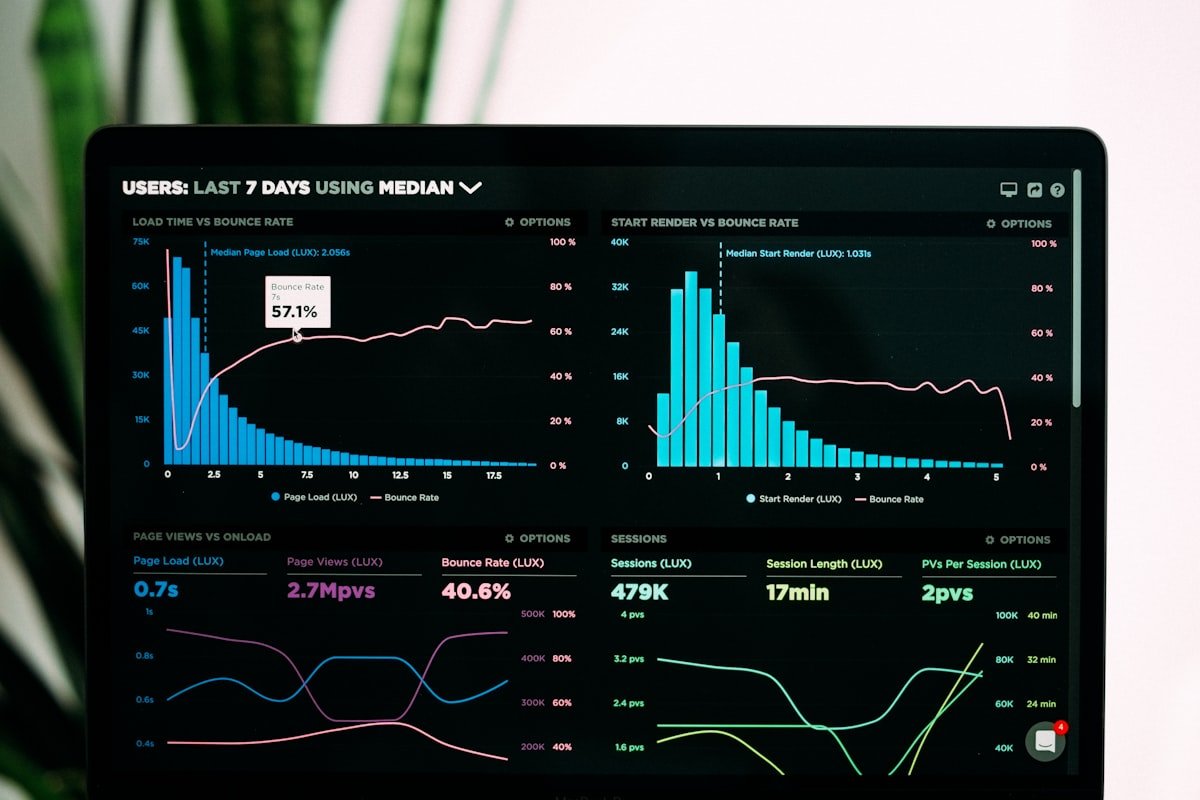
The result: a $30,000 invoice for one user's Bedrock exploration with Claude, reported by The Register on May 14, 2026. The charge is not a billing error. It represents real API usage — requests sent, tokens processed, compute consumed. And it could happen to any developer, analyst, or IT team that runs Claude on Bedrock without first configuring cost controls.
The Structural Problem: AI Platforms Ship Without Cost Governors
Every major cloud AI platform bills on consumption — AWS Bedrock, Google Vertex AI, and Azure OpenAI all use pay-per-token pricing with no default spending cap. This design is deliberate for enterprise customers who need uncapped throughput. But for smaller teams and individual developers, it creates a silent financial trap.
Here is why costs can escalate so quickly:
- Experiments scale automatically — A test on 10 documents is harmless. Forget a loop limit, and the same script processes 100,000 documents overnight.
- Context windows are expensive — Claude's extended context window (the maximum amount of text it can hold in active memory during one session) can process hundreds of pages per request. Each such call carries a proportionally large cost.
- Retries compound charges — Code that automatically retries failed API calls can generate thousands of duplicate requests before a developer notices the error log.
- Billing dashboards lag — AWS billing data can be hours or even days behind real-time usage. A spike may cost thousands of dollars before it appears on your dashboard.
Developer communities on Reddit, Hacker News, and GitHub Issues have documented similar cost explosions across OpenAI, Anthropic, and Google Cloud. The $30,000 Bedrock invoice is an extreme case — but it is not an isolated one. The pattern repeats: experimental code plus automated loops plus no spending cap equals an unexpected five-figure invoice.
One Week, Three AI Failures: A Broader Pattern Emerges
The AWS billing story broke alongside two other high-profile AI failure reports in the same week — all pointing to the same structural gap: AI systems shipped to production before their safeguards were fully designed or tested.
Ontario's Hospital AI Note-Takers Are Making Diagnostic Errors
Ontario provincial auditors released findings in May 2026 confirming that AI note-taking tools — software that automatically transcribes and summarizes doctor-patient consultations in real time — are routinely making basic factual errors in clinical documentation. The report ranked first on Hacker News with 286 upvotes and 133 comments, the highest engagement of any AI story that week.
The stakes are immediate: a misrecorded medication name, an incorrectly attributed symptom, or a wrong diagnosis summary in a patient file can affect prescriptions, specialist referrals, and ongoing care decisions. Ontario's audit did not name a specific AI vendor, but confirmed this is a systemic failure pattern across deployed tools — not a one-off glitch from a single product.
Waymo Recalled 3,800 Robotaxis Over a Flooded-Road Software Bug
Waymo — Alphabet's autonomous vehicle division (a company that builds self-driving cars) — issued a formal recall of 3,800 robotaxis after its software failed to correctly navigate flooded roads. The vehicles exhibited unexpected autonomous behavior: driving decisions that passengers, operators, and Waymo's engineers did not anticipate or authorize.
A software recall in autonomous vehicles is the operational equivalent of a brake recall — it affects real people in moving cars on real roads during real weather events. 3,800 units is a significant share of Waymo's deployed fleet, and the incident signals that edge-case handling (how an AI system responds to unusual or hazardous conditions it wasn't trained on) remains an unresolved engineering challenge even at the frontier of autonomous driving.

Across all three stories — billing explosions, diagnostic errors, vehicle recalls — the underlying pattern is identical: AI shipped under competitive pressure, with safeguards arriving after the product rather than before it. As Tencent acknowledged this same week, GPUs (the specialized chips that power AI) are only economically profitable when running at maximum utilization. That pressure to ship fast and fill capacity is baked into the economics of the industry.
Five Steps to Protect Yourself Before Your Next AI Experiment
If you or your team plan to explore Claude, GPT-4o, or any AI model through a cloud platform, take these steps before your first API call — not after you see the invoice:
- Set up AWS Budgets — AWS Console → Billing → Budgets → Create Budget. Set a monthly cost threshold with alerts at 50% and 80% of your limit. Free to configure, takes 5 minutes.
- Enable Cost Anomaly Detection — AWS's free monitoring service flags unusual spending within hours of a spike, not days later. Find it at: Billing → Cost Management → Cost Anomaly Detection.
- Request lower service quotas for dev environments — In AWS Bedrock, use Service Quotas to request reduced throughput limits for experimental accounts. This prevents runaway automated jobs from scaling without a ceiling.
- Calculate costs before any batch run — Estimate your token volume (input + output) and multiply by the model's per-million-token rate. The AWS Pricing Calculator at calculator.aws handles this in under 5 minutes.
- Start with Claude.ai before committing to Bedrock — For exploratory work, Anthropic's Claude.ai subscription offers fixed monthly pricing with no per-token billing. Validate your use case there first.
# Quick cost sanity check before any batch job
# Example rates: Claude Sonnet on AWS Bedrock (approximate)
# Input:  $3.00 per million tokens
# Output: $15.00 per million tokens

documents         = 1000
avg_input_tokens  = 2000   # ~1,500 words per document
avg_output_tokens = 500    # tokens per AI response

total_input  = documents * avg_input_tokens   # 2,000,000 tokens
total_output = documents * avg_output_tokens  # 500,000 tokens

input_cost  = (total_input  / 1_000_000) * 3.00   # $6.00
output_cost = (total_output / 1_000_000) * 15.00  # $7.50

print(f"Estimated batch cost: ${input_cost + output_cost:.2f}")
# Output: Estimated batch cost: $13.50
# This check takes 30 seconds. Skipping it cost one developer $30,000.
The $30,000 Bedrock invoice is not a freak accident — it is what happens when none of the guardrails above are in place. Running the calculation takes under a minute. Not running it has cost at least one developer a month's salary.
Before you experiment with Claude or any cloud-hosted AI model at scale, visit the AI for Automation setup guide — it covers how to configure cost-safe API access, set spending thresholds, and estimate monthly usage before you commit to a plan.
Related Content — Get Started | Guides | More News
Sources
Stay updated on AI news
Simple explanations of the latest AI developments