claude-mem: Give Claude Code Long-Term Memory, Save 18x on Tokens
Add long-term memory to your AI coding assistant with the claude-mem plugin for Claude Code. Save up to 18x on token costs. 36K GitHub stars. Two-line install, works automatically.
A Problem Every Claude Code User Knows — Explaining Everything from Scratch Every Time
The most frustrating moment with AI coding assistants like Claude Code: you worked on code together yesterday, but open a new conversation today and AI remembers nothing. "This project uses React, the database is PostgreSQL, authentication works like this..." — repeating the same explanation every time.
claude-mem solves exactly this. It's a plugin that gives Claude Code long-term memory, automatically recording, compressing, and searching work content to carry context into the next session. Currently at 36,000 GitHub stars, with 1,017 added today alone. Even AI coding beginners can easily install and use it.
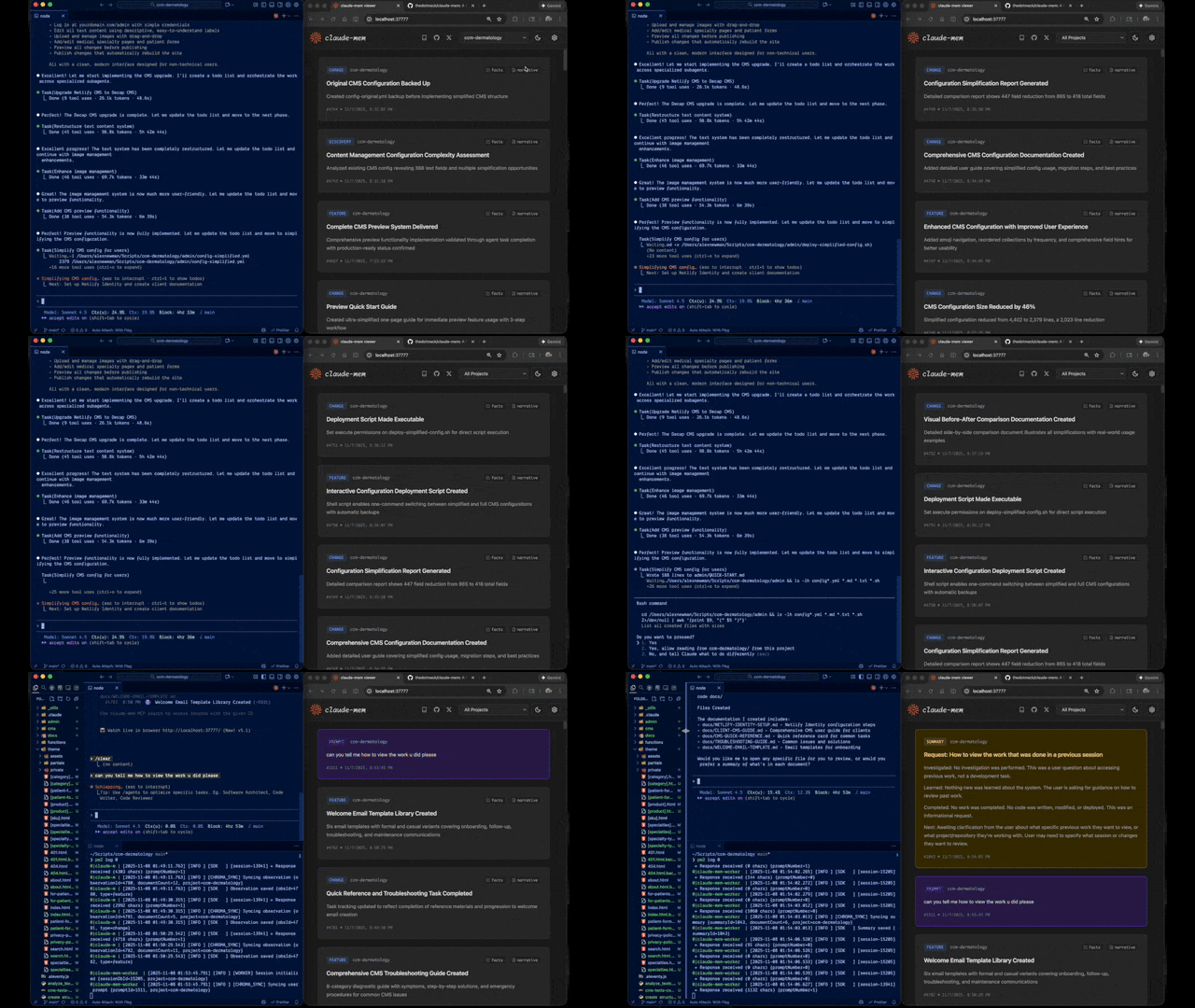
How claude-mem Works: 5-Stage Automatic Memory Process
claude-mem hooks into Claude Code's 5-stage lifecycle automatically. No need to say "remember this."
Automatic Memory Process:
① Session start → Auto-injects relevant previous memories
② During work → Observes and records all AI actions (reading, editing, running files)
③ Session end → AI auto-generates "what I learned today" summary
④ Next session → Selectively provides only relevant memories
The key is semantic compression (meaning-based summarization). Instead of storing hundreds of tool execution logs verbatim, AI extracts and saves only what it judges as "important for this project."
Save Up to 18x on AI Token Costs — Progressive Disclosure
One of the biggest concerns with AI is token costs (charges based on text volume sent to AI). claude-mem uses a 3-stage progressive disclosure approach to dramatically reduce costs.
Stage 1 search — Shows only relevant memory titles (~50-100 tokens)
Stage 2 timeline — View before/after context of selected memories
Stage 3 get_observations — Detailed retrieval of needed memories only (~500-1,000 tokens)
Official benchmarks show 11-18x token savings for code navigation and 4-8x for file comprehension. Real cost savings for those concerned about monthly API bills.
Real-Time Memory Viewer
After installation, a web viewer opens at http://localhost:37777. See in real-time what AI remembers — session timelines, observation records, and summaries at a glance. Transparently track "how well does AI understand my project."

28 Programming Languages — AI Memory Beyond Just Coding
Beyond simple coding records, claude-mem supports 28 programming languages and various work modes. Besides code mode, there's email investigation mode, casual conversation mode, and recently a law study mode with case analysis, issue pattern organization, and automatic lecture point recording.
The <private> tag lets you exclude sensitive information from memory for security.
Installation: 2 Lines
If you're using Claude Code, install with these commands:
/plugin marketplace add thedotmack/claude-mem
/plugin install claude-mem
Works automatically after installation. Requires Node.js 18+; Bun and SQLite auto-install. If you haven't installed Claude Code yet, check the Claude Code installation guide first.
Advanced settings in the official docs; community chat on Discord.
The Future: AI That Remembers
AI coding assistants until now had the fundamental limitation of "forgetting everything when a conversation ends." claude-mem solves this, making AI understand projects more deeply over time. AI that gets smarter the more you use it — this is the core direction for next-generation AI tools.
In a similar vein, OpenViking (ByteDance's AI agent memory system) and Cognee (knowledge graph memory engine) follow the same trend. The AI memory race has officially begun.
To learn more about AI and vibe coding, check out our free learning guide.
Related Content — Get Started with AI | Free Learning Guide
Stay updated on AI news
Simple explanations of the latest AI developments