BlackRock just warned: AI will make the rich richer
The CEO who controls $11.6 trillion says AI will concentrate wealth like never before — and most people aren't positioned to benefit.
Larry Fink, CEO of BlackRock — the world's largest asset manager with $11.6 trillion under management — just published his annual letter to investors. His warning landed like a thunderclap: AI is about to concentrate wealth at a scale the world has never seen.
"The massive wealth created over the past several generations flowed mostly to people who already owned financial assets," Fink wrote. "Now AI threatens to repeat that pattern at an even larger scale — concentrating wealth among the companies and investors positioned to capture it."

Why a $11.6 Trillion Warning Matters
BlackRock manages more money than the GDP of every country on Earth except the United States and China. When the person controlling that much capital warns about inequality, markets and policymakers listen.
Fink describes what economists call "K-shaped" outcomes — an economy that splits in two directions at once, where winners surge ahead while everyone else falls behind. He pointed to a vivid example: Walmart recently hit its highest-ever valuation while Saks went bankrupt just two weeks later.
"This is where much of today's economic anxiety comes from," Fink wrote. "A deeper feeling that capitalism is working — just not for enough people."
How AI Splits the Economy in Two
Fink's letter describes a world where AI creates three distinct groups:
The winners: Companies and investors who own AI infrastructure — data centers, chips, energy systems — pull further and further ahead.
The squeezed middle: Workers whose jobs AI can partially automate face wage pressure, longer hours, or displacement. A recent study of 164,000 workers found AI made them busier — not more productive.
The left behind: People without investments miss the wealth creation entirely — even as AI makes products and services cheaper around them.
There's one bright spot Fink highlights: skilled trades are in high demand and pay well, "especially the ones building the physical infrastructure of AI — like data centers, power systems, and electrical grids." The electricians wiring AI data centers may fare better than the office workers AI replaces.
Fink's Fix: Make Investing as Easy as Paying
Rather than slowing AI down, Fink argues the solution is making it easier for ordinary people to own a piece of AI's growth. His three proposals:
1. Tokenization — Turning assets like bonds, real estate, and infrastructure into digital shares that anyone can buy in tiny amounts. Think of it as buying $10 of a data center instead of needing millions. Fink compared this to the internet in 1996 — the transformation is just starting.
2. Digital wallets — Your phone becomes both your bank account and your brokerage, holding investments alongside payments.
3. Expanded retirement accounts — New "early wealth-building accounts" that give younger workers access to markets sooner, including alternative investments (like infrastructure funds) inside 401(k) plans.
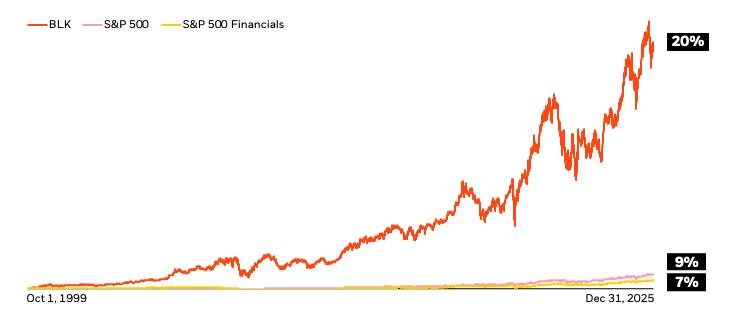
BlackRock isn't just talking. The firm closed a $25.2 billion infrastructure fund — the largest in private infrastructure history — acquired AI data center company Aligned Data Centers, and reports nearly $150 billion in assets connected to digital markets.
The Irony Critics Are Pointing Out
Not everyone is buying Fink's message. Critics note the contradiction: BlackRock, which manages more money than any firm in history, is warning about wealth concentration while actively positioning itself to profit from AI infrastructure. The company's AI Infrastructure Partnership is investing billions in the very assets Fink says will concentrate wealth.
Others argue that making investing "easier" doesn't help people who have no money to invest in the first place. The letter proposes no direct solutions for workers displaced by AI — no retraining programs, no safety nets, no AI taxation.
A recent poll found 60% of Americans want AI companies to compensate workers who lose their jobs to automation. Fink's letter doesn't go nearly that far.
The Numbers That Should Worry Everyone
Fink's warning arrives at a turning point. Companies poured $410 billion into AI in 2025, yet Goldman Sachs recently reported the technology contributed essentially zero measurable growth to the U.S. economy. The money is flowing in, but the benefits haven't reached most people yet.
Meanwhile, AI is increasingly central to geopolitics. "AI is here to stay," Fink wrote. "It is central to strategic competition between the United States and China." The implication: this isn't a trend you can opt out of.
"History suggests that transformative technologies create enormous value," Fink concluded. The question he's really asking — and the one that affects everyone reading this — is who gets to keep it.
What You Can Do Right Now
• Check your 401(k) or IRA — Does it include any tech or AI-focused index funds? If not, consider adding one.
• Look into fractional investing — Apps like Fidelity, Schwab, and others now let you buy fractions of shares for as little as $1.
• Read Fink's full letter — It's free at BlackRock's website. Whether you agree with him or not, understanding how the world's largest investor thinks about AI tells you something important about where money is flowing.
Related Content — Get Started with Easy Claude Code | Free Learning Guides | More AI News
Stay updated on AI news
Simple explanations of the latest AI developments